
Magnesium: The Calm Mineral Behind Your Energy, Sleep and Strength

A simple guide to what magnesium does, why your body needs it, and how to choose the right form.
Think about the last time you felt tired for no clear reason, woke up with a tight neck, or lay awake when you should have been asleep. Many things can cause these everyday troubles, and one that often goes unnoticed is magnesium.
Magnesium is involved in more than 300 reactions in your body. It helps turn food into energy, lets your muscles relax, and keeps your nerves and heart working smoothly. Let’s look at how this mineral works, what the different supplement forms mean, and how to bring more of it into your day.
Magnesium in Your Day-to-Day Life
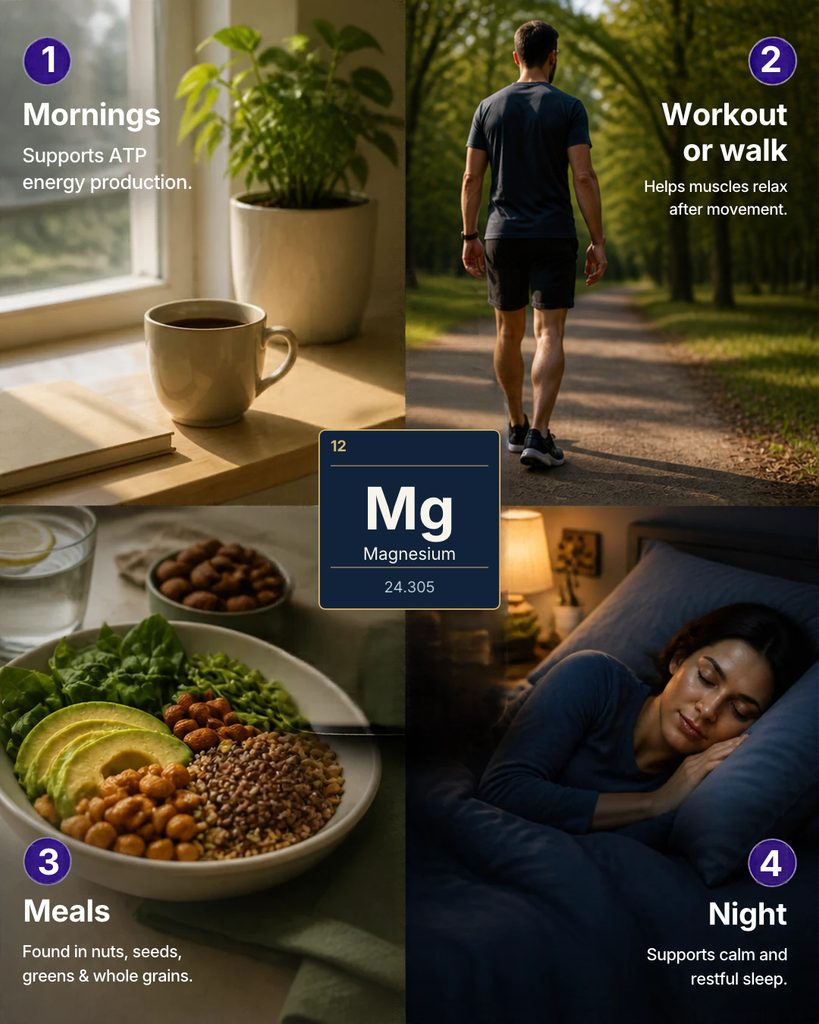
You rely on magnesium more often than you think.
- Morning: Your cells need magnesium to make and use ATP, the molecule that powers almost everything you do.
- At your desk: Muscles that stay tense for hours need magnesium to release and relax.
- Workout or walk: Muscles contract with the help of calcium and relax with the help of magnesium.
- Stressful moments: Your nervous system uses magnesium to regulate how excitable your nerve cells are.
- Meals: Foods like seeds, nuts, leafy greens and whole grains are your main natural sources.
- Night: A calm nervous system and relaxed muscles are part of falling asleep and staying asleep.
From the first cup of chai to the last stretch before bed, magnesium is working in the background.
What Exactly Is Magnesium?
Magnesium is an essential mineral, which means your body can’t make it and has to get it from food, drinks or supplements.
Roughly half to 60% of the magnesium in your body is stored in your bones. Most of the rest is in muscles and soft tissues, and only a tiny fraction circulates in your blood. This is why a normal blood test doesn’t always show a shortfall, even when your intake has been low for a while.
Why Magnesium Is So Important

Magnesium matters at every stage of life:
- Energy: It helps your cells convert food into usable energy.
- Muscles and nerves: It supports normal muscle and nerve function.
- Bones: It is part of bone structure and helps activate vitamin D, which your body needs to use calcium.
- Heart: It works with calcium, potassium and sodium to keep your heartbeat regular.
- Blood sugar and blood pressure: It supports enzymes that handle glucose and helps blood vessels function normally.
Modern life can make it easy to fall short. Refined foods, high stress, heavy sweating, and some medicines can lower magnesium intake or increase how much you lose.
How Magnesium Works Inside Your Body
Here is its journey, step by step.
1. It arrives through food. Magnesium from seeds, nuts, greens and whole grains is absorbed mainly in the small intestine.
2. It teams up with energy molecules. ATP, your cells’ fuel, has to be bound to magnesium to work properly. Without enough magnesium, your cells can’t use their energy efficiently.
3. It balances calcium in your muscles. Calcium triggers a muscle to contract, and magnesium helps it release. The two work as a pair, which is why low magnesium can show up as cramps or twitching.
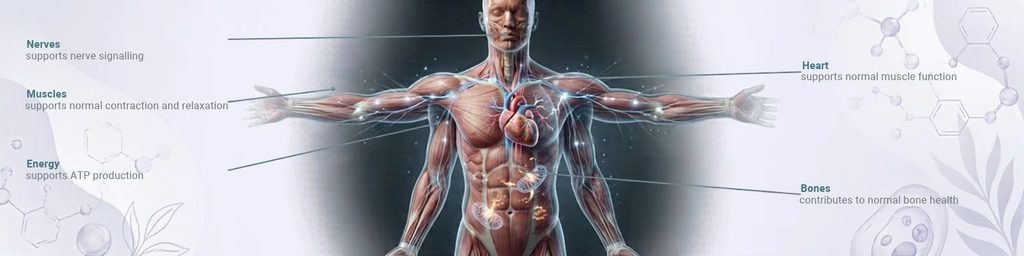
4. It steadies nerve signals. Magnesium helps regulate how easily nerve cells fire, which supports calm, clear signalling between brain and body.
5. It helps build and maintain bone. It becomes part of your bone structure and helps activate vitamin D.
6. It supports blood sugar and blood pressure. It helps enzymes that process glucose and supports normal blood vessel function.
7. It keeps your heart rhythm steady. Together with other minerals, it helps maintain a regular heartbeat.
A simple way to remember it: calcium contracts, magnesium lets go.
The Benefits of Magnesium
Everyday energy. Supports normal energy metabolism and helps reduce tiredness and fatigue.
Healthy muscle function. Supports normal muscle function, including relaxation and recovery.
Calm and restful sleep. May support relaxation and sleep quality as part of healthy habits.
Strong bones and teeth. Contributes to the maintenance of normal bones and teeth.
Heart health. Supports normal heart muscle function and blood pressure within a healthy lifestyle.
A balanced nervous system. Supports normal nerve function and psychological balance.
The Different Forms of Magnesium

Magnesium is always bound to another substance in a supplement. That partner changes how well it is absorbed, how gentle it is on the stomach, and what it is commonly used for.
1. Magnesium glycinate. Gentle on the stomach and popular for relaxation and bedtime. It aids in muscle contraction and relaxation, helping to reduce cramps, twitches, and post-workout soreness.
2. Magnesium citrate. Well absorbed and a good all-round choice. Higher doses can loosen stools.
3. Magnesium threonate. is a supplement form of magnesium bound to threonic acid, studied primarily for its ability to cross the blood-brain barrier and support brain health, memory, focus, synaptic plasticity, and age-related cognitive function.
4. Magnesium oxide. Contains a high amount of magnesium per tablet and is often used for occasional constipation. Your body absorbs it less well than other forms.
5. Magnesium malate. Often chosen for daytime energy and muscle support. Research on specific effects is still limited.
Which Form May Suit You?
These are common starting points to discuss with your doctor or pharmacist, not prescriptions:
- Calm and better sleep: glycinate
- Muscle support and recovery: citrate or malate
- Everyday general support: citrate or glycinate
- Occasional constipation: oxide or citrate
- Focus and brain support: threonate
How Much Magnesium Do You Need?
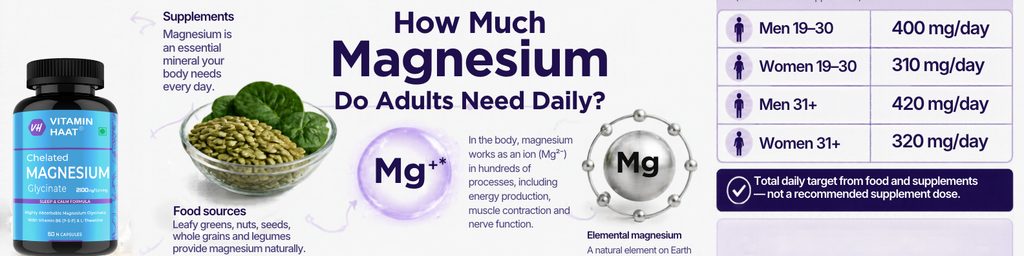
Most adults need roughly 300 to 420 mg per day from all sources, depending on age and sex. Pregnant and breastfeeding women may need more. Your doctor can tell you what is right for you.
Magnesium-Rich Foods You Can Add Today
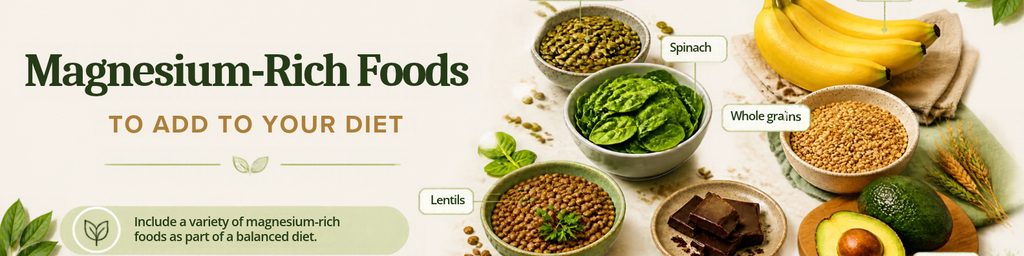
- Pumpkin seeds, sunflower seeds and flaxseeds
- Almonds, cashews and peanuts
- Spinach, amaranth and other leafy greens
- Whole grains such as oats, brown rice and ragi
- Beans, lentils and chickpeas
- Bananas and avocados
- Dark chocolate, in small amounts
Signs You May Not Be Getting Enough
Mild shortfalls often cause no obvious symptoms. Over time, signs can include:
- Muscle twitches or cramps
- Tiredness and weakness
- Trouble sleeping
- Irritability or feeling on edge
- Tingling or numbness
These symptoms have many possible causes, so please see a doctor rather than guessing.
Key Takeaways
- Magnesium helps with over 300 reactions in the body, including energy, muscle and nerve function.
- Calcium contracts and magnesium lets go, so the two work as a pair.
- Different forms suit different needs, so check the label and match the form to your goal.
- Food first, supplements second, and always talk to your doctor for personal advice.
Looking after your magnesium is a simple way to support your energy, your sleep and the way your body moves. Start with one small change today, like a handful of pumpkin seeds or an extra plate of greens.
Disclaimer: This article is for general information only and is not a substitute for professional medical advice. Please consult your doctor before starting any supplement, especially if you are pregnant, have kidney problems or take regular medicines.