
Calcium: The Quiet Mineral That Powers Your Everyday Life
A simple guide to what calcium does, why your body can’t live without it, and how to make sure you get enough.
Think about your morning so far. You woke up, stretched, stood on your feet, maybe sipped a cup of chai or milk, and brushed your teeth. Every one of those small actions quietly depended on one mineral: Calcium.
Most of us link calcium with “strong bones” and stop there. But calcium is also the spark behind every heartbeat, every muscle twitch and every message your brain sends. Let’s walk through how this mineral works, why it matters, and how you can look after your levels in everyday life.
Calcium in Your Day-to-Day Life

You meet calcium far more often than you realise.
- Morning: The milk in your tea or coffee, the curd with breakfast, or the ragi porridge on your plate are all calcium sources.
- Movement: Climbing stairs, carrying groceries or playing with your kids relies on calcium-driven muscle contractions and bones strong enough to take the load.
- Smile: Your teeth are built largely from calcium, which is why they can bite through an apple or a crunchy snack.
- Heartbeat: Your heart beats roughly 100,000 times a day, and each beat is triggered by calcium moving in and out of heart muscle cells.
- Injuries: When you get a small cut, calcium helps your blood clot so the bleeding stops.
- Night: Even while you sleep, your body keeps tightly balancing calcium in your blood and quietly rebuilding bone.
In short, calcium works in the background of nearly everything you do.
What Exactly Is Calcium?
Calcium is the most abundant mineral in the human body. Your body can’t make it, so it has to come from diet. About 99% of the calcium in your body is stored in your bones and teeth, where it gives them hardness & structure. The remaining 1% circulates in your blood, muscles and the fluid around your cells. That tiny 1% is critical: it keeps your heart, nerves & muscles working, your body will pull calcium from your bones to protect it if your diet falls short.
Why Calcium Is So Important

Calcium matters at every stage of life:
- Childhood and teens: Bones grow fast and build up the “bone bank” you’ll rely on for life.
- Young adulthood (until around 30): Bone density usually peaks. The more you build now, the more reserve you have later.
- Adulthood: Bone is constantly broken down and rebuilt, and calcium supplies the raw material.
- Later life: Bone loss speeds up, especially in women after menopause, so steady calcium intake helps protect against fragile, easily broken bones.
When the 1% in your blood drops too low, your body takes calcium from your skeleton to compensate. Over months and years, that can quietly weaken bones.
How Calcium Works Inside Your Body
Here is the journey calcium takes, step by step.
1. Absorption. After you eat or take a supplement, calcium is absorbed mainly in the small intestine. Vitamin D is the key helper here. Without enough of it, your body absorbs only a fraction of the calcium you consume.
2. Travel through the blood. Absorbed calcium enters the bloodstream. Your body keeps blood calcium within a very narrow range, using hormones to fine-tune it.
3. Hormonal balance. When blood calcium dips, the parathyroid glands release parathyroid hormone (PTH), which draws calcium from bone, reduces loss through the kidneys and boosts vitamin D activation. When levels rise, another hormone, calcitonin, helps bring them back down.
4. Building bone. Bone is living tissue. Cells called osteoblasts lay down new bone using calcium, while osteoclasts break down old bone. This constant renewal keeps your skeleton strong and repairs tiny damages.
5. Powering muscles. When a nerve signals a muscle to move, calcium floods into the muscle cell and triggers the proteins inside to slide and contract. Calcium is pumped back out, and the muscle relaxes. This happens every time you move, including every heartbeat.
6. Carrying nerve messages. Calcium helps nerve cells release the chemical messengers that pass signals to the next cell, which supports everything from reflexes to thinking.
7. Helping blood clot. When you’re injured, calcium is one of the factors needed for the clotting process to form a seal.
This is why calcium is often called a master messenger of the body: it doesn’t just build structure, it keeps everything communicating.
The Benefits of Calcium
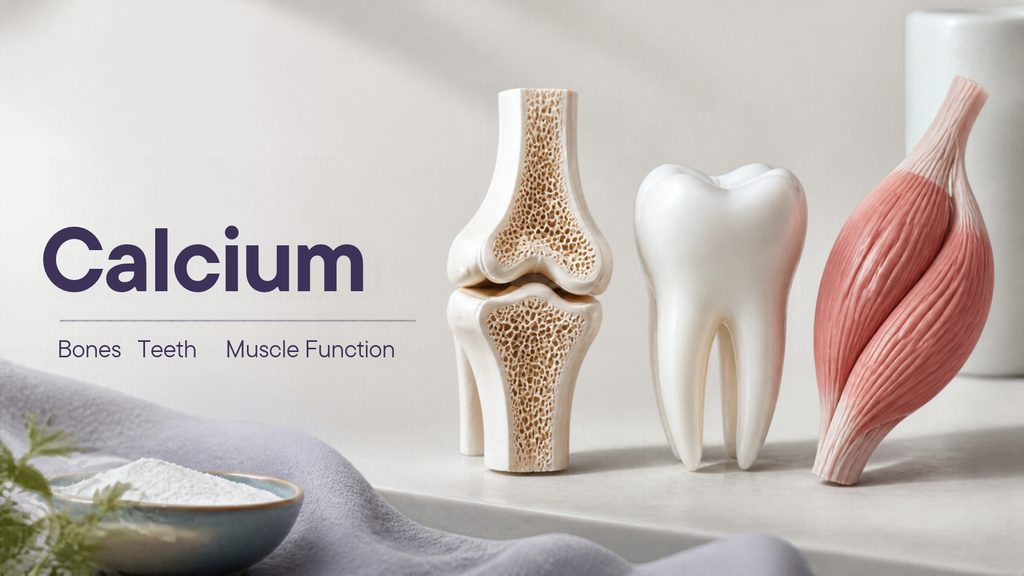
Stronger bones and teeth. The best-known benefit. Adequate calcium supports bone density and helps lower the risk of osteoporosis and fractures later in life.
Healthy muscle function. Calcium supports smooth contraction and relaxation, which helps with movement, strength and recovery.
A steady heart rhythm. Calcium is part of the electrical signalling that keeps your heart beating in a regular pattern.
Smooth nerve communication. From sensation to movement, nerves depend on calcium to pass messages along.
Normal blood clotting. Helps your body respond properly to cuts and injuries.
Support for hormone and enzyme activity. Many enzymes and hormones need calcium to work properly.
Support through key life stages. Pregnancy, breastfeeding, growing years and menopause all raise the body’s need for calcium.
Everyday Uses of Calcium
Beyond the body’s internal work, calcium shows up in daily life in a few practical ways:
- Nutrition: Food and drinks naturally rich in calcium, or fortified with it.
- Supplements: Calcium tablets or capsules help people who can’t meet their needs through food alone, such as those who avoid dairy, have higher requirements, or have limited appetite.
- Dental health: Calcium supports strong enamel and healthy jawbones.
- Bone support in older adults: Often combined with vitamin D to help maintain bone strength.
How Much Calcium Do You Need?
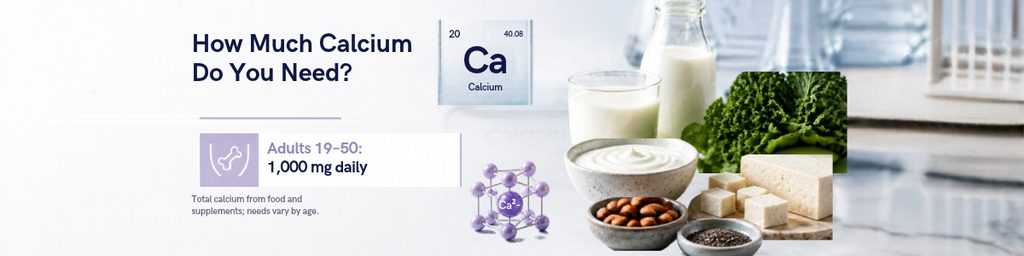
Needs vary by age and life stage. As a general guide, most healthy adults need around 1,000 mg per day. Teenagers, pregnant or breastfeeding women, and women after menopause may need more. Your doctor can tell you the right amount for you.
Calcium-Rich Foods You Can Add Today
You don’t need anything fancy. Many everyday Indian foods are great sources:
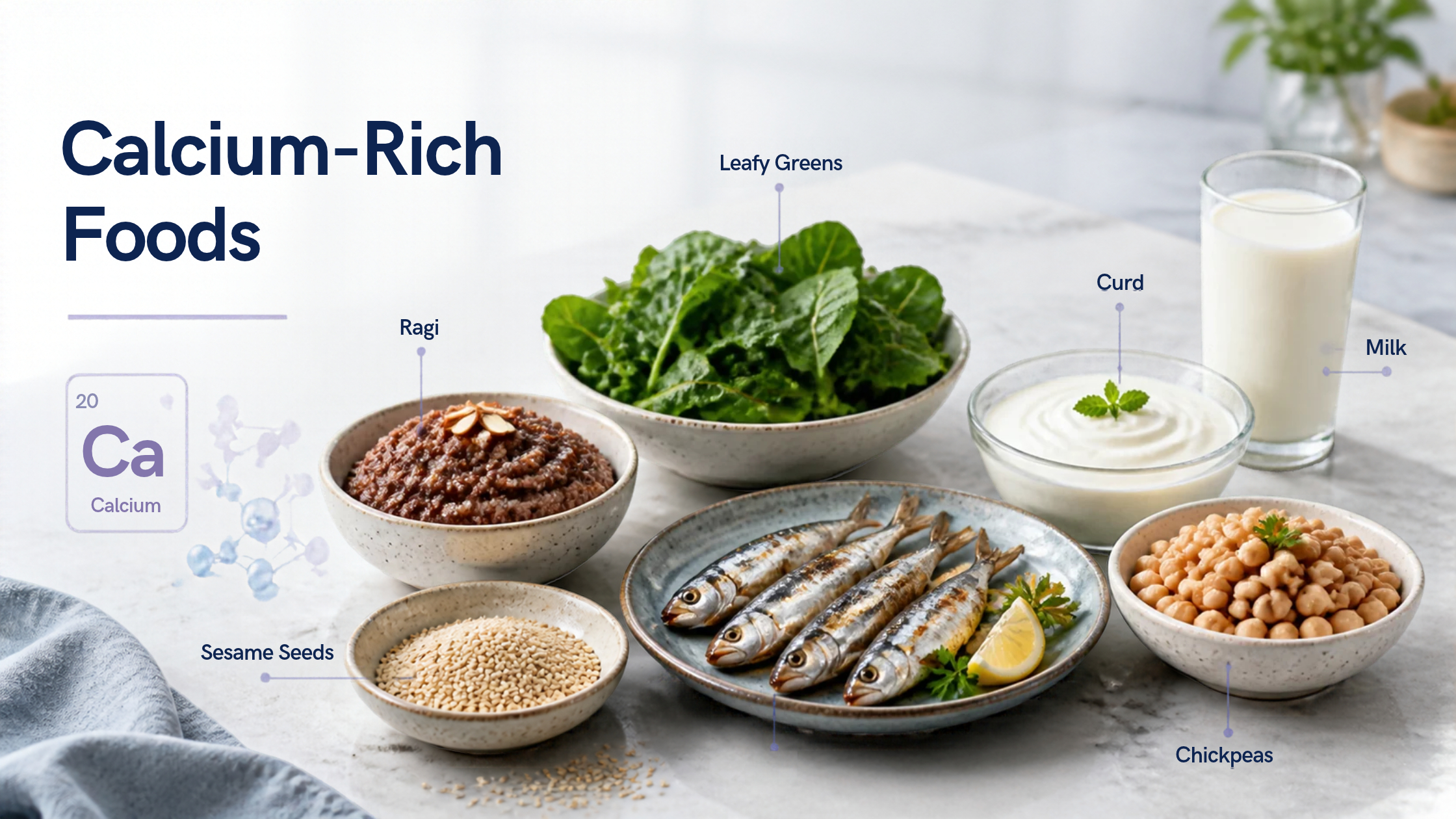
- Milk, curd (dahi), buttermilk, paneer
- Ragi (finger millet), Fish
- Sesame seeds (til) and almonds
- Leafy greens: drumstick leaves, curry leaves
- Beans, lentils and chickpeas
Tips to Help Your Body Absorb Calcium
- Get enough vitamin D. Spend some time in morning sunlight and talk to your doctor about your levels, since deficiency is very common.
- Spread your calcium through the day. The body absorbs calcium better in smaller amounts, around 500 mg or less at a time.
- Stay active. Walking, jogging, dancing and strength training signal your bones to stay strong.
- Go easy on excess salt, caffeine and fizzy drinks. Very high intakes can increase calcium loss.
- Don’t forget magnesium and vitamin K. They work alongside calcium in bone health.
Mild shortfalls often show no symptoms at first, which is why calcium is called a silent need. Over time, signs can include:
- Muscle cramps or spasms
- Tingling or numbness in fingers
- Brittle nails or weak teeth
- Fatigue
- Bones that break easily
These symptoms can have many causes, so please see a doctor rather than guessing, and don’t start high-dose supplements on your own.
Is Supplementing Right for You?
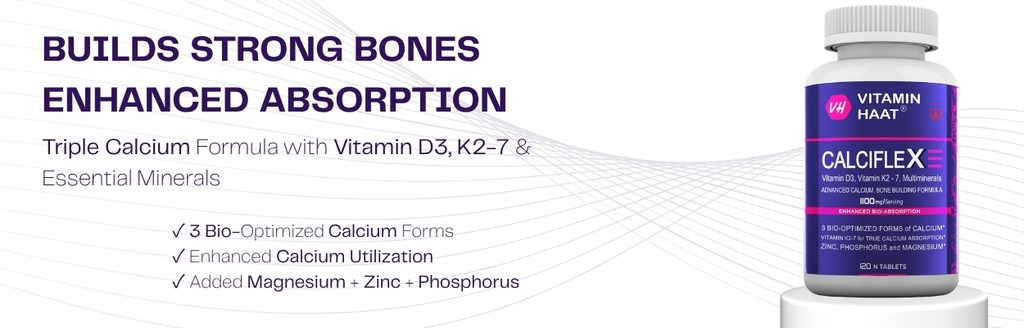
Food should come first, but supplements can fill the gap when your diet falls short. If you choose one, look for a trusted brand with quality testing, check the amount of elemental calcium per dose, and pair it with adequate vitamin D. More is not better: too much calcium can cause constipation, kidney stones and other problems, so stick to recommended amounts and check with your doctor, especially if you have kidney issues or take other medicines.
At VitaminHaat, our CalcifleX Calcium Tablets are made to support this everyday need, as part of a balanced diet and active lifestyle.
Key Takeaways
- Calcium is the body’s most abundant mineral, with 99% stored in bones and teeth.
- The remaining 1% powers your heart, muscles, nerves and blood clotting.
- Vitamin D is essential for your body to absorb calcium.
- Your bones are living tissue, and they need steady calcium throughout life.
- Aim for food first, supplements second, and always talk to your doctor for personal advice.
Looking after your calcium is one of the simplest ways to invest in the way you move, work and live for years to come. Start with one small change today, whether that’s a bowl of curd, a handful of sesame seeds or a ten-minute walk in the sun.
Disclaimer: This article is for general information only and is not a substitute for professional medical advice. Please consult your doctor before starting any supplement.